Is Your Tree Ready for Hurricane Season? A Central Florida Homeowner’s Checklist
Florida storm season has a way of turning “we should probably get that tree checked” into an urgent problem overnight. One heavy band of wind and rain can break […]
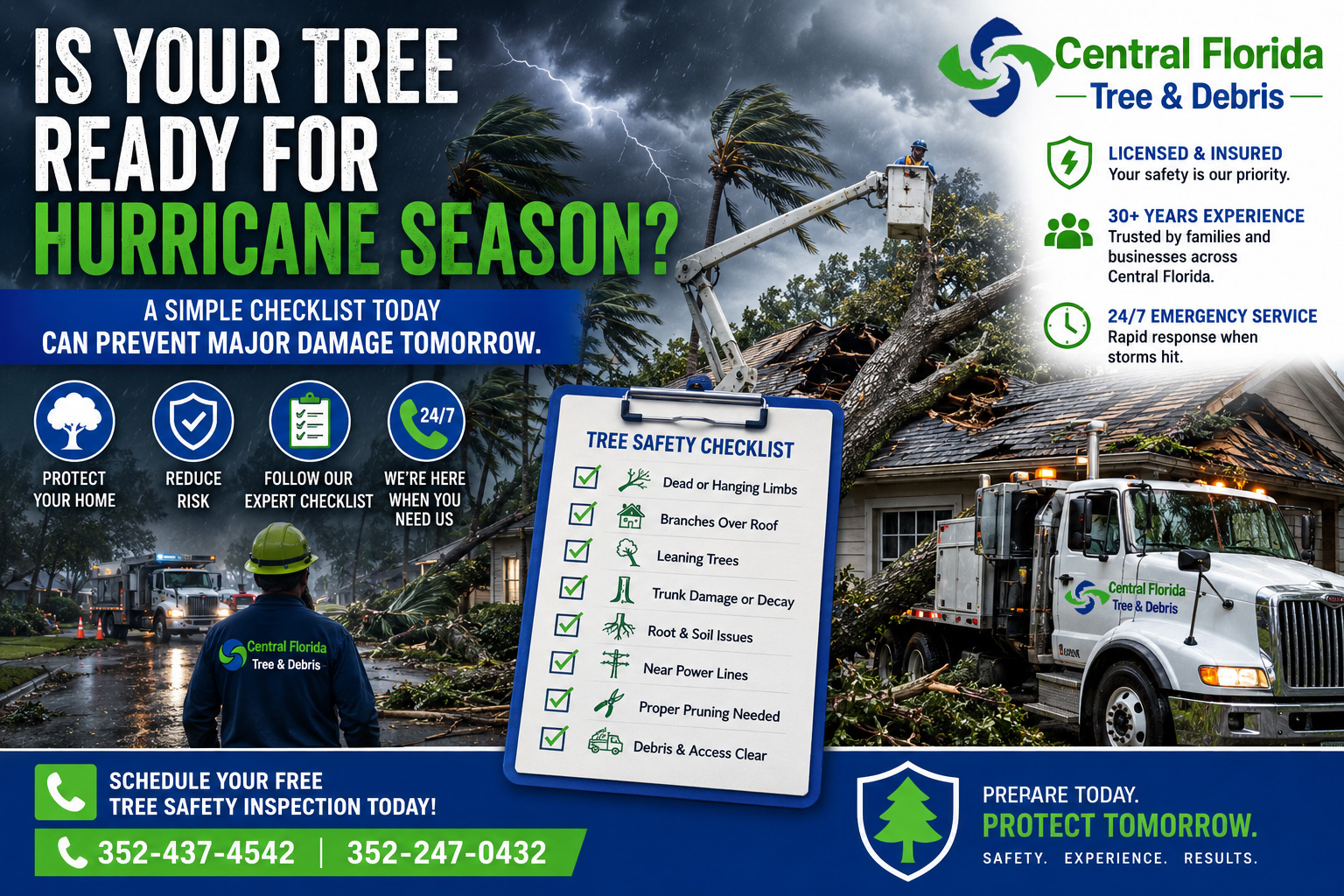
Florida storm season has a way of turning “we should probably get that tree checked” into an urgent problem overnight.
One heavy band of wind and rain can break a weak limb, uproot a stressed tree, send branches across a roofline, or block a driveway when you need access most. For homeowners in Dade City, Zephyrhills, Wesley Chapel, Tampa, Brooksville, and surrounding Central Florida communities, tree preparation is one of the most practical steps you can take before hurricane season gets active.
The Atlantic hurricane season runs from June 1 through November 30. NOAA’s 2026 outlook calls for a below-normal Atlantic hurricane season, but even a quieter season can still produce a storm that affects Central Florida. The right mindset is simple: prepare the property before the weather turns.
This checklist will help you look at your trees before severe weather arrives, understand warning signs, and know when it is time to call a professional tree service.
Central Florida Tree & Debris provides residential tree services, emergency storm services, hazardous removals, stump grinding, debris hauling, disaster recovery, arborist services, and emergency insurance services across Central Florida. Whether you need preventative trimming or urgent storm cleanup, the goal is always the same: make the property safer, protect what matters, and handle the work with the right crew and equipment.
Why Tree Preparation Matters Before Hurricane Season
A healthy, well-maintained tree can add shade, beauty, privacy, and value to your property. But a neglected tree can become a major hazard during high winds.
The danger is not always the whole tree falling. More often, the problem starts with dead limbs hidden inside the canopy, heavy branches extending over the roof, cracked or split limbs, weak branch unions, decay near the trunk or root flare, trees leaning toward structures, or overgrown branches that catch wind like a sail.
The key is not to “hack back” a tree before a storm. The goal is to reduce risk while preserving the tree’s natural strength. Good storm preparation is selective, practical, and based on the condition of the tree and the risk to nearby people, homes, vehicles, fences, driveways, and utility lines.
Central Florida Tree Safety Checklist
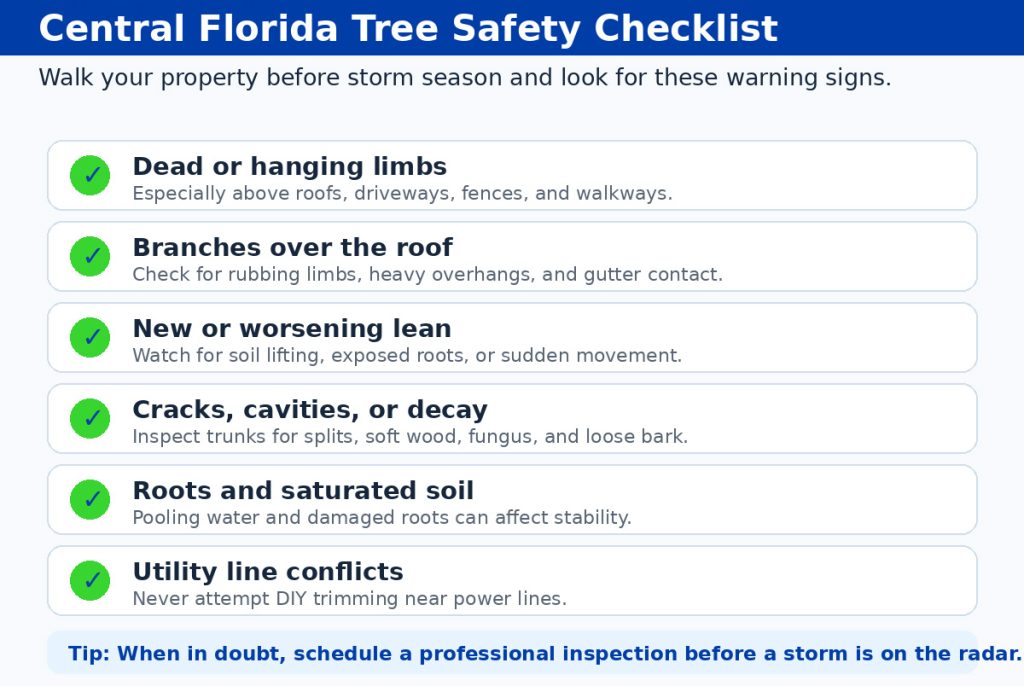
1. Look for Dead, Broken, or Hanging Limbs
Start by looking up into the canopy. Dead branches often appear gray, brittle, bare, or noticeably different from the rest of the tree. They may have no leaves while surrounding branches are full and green.
Broken limbs may be hanging loosely, resting on other branches, or suspended above the yard. During calm weather, they may seem harmless. During a storm, they can become dangerous projectiles.
Call a professional if you see large dead limbs over your home, driveway, pool cage, shed, or fence; broken branches caught in the canopy; limbs hanging above walkways or parking areas; branches touching or approaching power lines; or deadwood in a large oak, pine, palm, or other mature tree.
Dead branches are one of the most important pre-storm issues to address because they are already structurally compromised.
2. Check for Branches Over the Roof
Branches over a roofline are common in Central Florida, especially around mature live oaks. Not every branch over a home needs to be removed, but roof contact and excessive weight are concerns.
Look for limbs that touch shingles, gutters, fascia, or screen enclosures; hang low over the roof; rub against the house during windy weather; drop heavy debris into gutters; extend far from the trunk without enough support; or could strike the home if they broke.
Professional pruning can often reduce weight, improve clearance, and remove the most hazardous branches without damaging the tree’s structure. This is especially important before hurricane season because limbs that seem manageable during regular afternoon storms may not hold up under tropical storm or hurricane-force winds.
3. Watch for Leaning Trees
Some trees naturally grow at an angle. A lean is not automatically an emergency. What matters is whether the lean is new, worsening, or paired with other warning signs.
Pay attention to trees leaning toward the home, garage, shed, driveway, neighbor’s property, power lines, pool cage, fence, road, or sidewalk.
A tree may need professional assessment if the soil is lifting on one side, roots are exposed, cracks are visible near the base, or the tree appears to have shifted after a recent storm. If a tree suddenly begins leaning after heavy rain or wind, treat it as urgent.
4. Inspect the Trunk for Cracks, Cavities, or Decay
The trunk gives important clues about the tree’s structural health. Look for vertical cracks, large cavities or hollow areas, loose or missing bark, fungus or mushrooms near the base, soft or decayed wood, old wounds that never closed properly, insect activity, or multiple trunks splitting apart.
A tree can look green and alive while still having serious internal decay. That is why questionable trunk issues should be inspected before a storm threatens.
5. Look at the Ground Around the Tree
The root system anchors the tree. If the roots or surrounding soil are compromised, the canopy may not be the only concern.
Check for raised soil on one side of the tree, cracking ground near the base, exposed roots that appear damaged, mushrooms growing near the trunk, areas where water pools around the roots, recent construction damage near the tree, driveway or sidewalk damage from roots, or soil movement after heavy rain.
Standing water, soil movement, and root damage can all affect stability. In Central Florida, saturated ground during storm season can make already-stressed trees more vulnerable.
6. Identify Trees Near Utility Lines
Trees near power lines require special caution. Do not attempt to trim branches touching or close to electrical lines.
If limbs are growing into service lines, hanging over utility connections, or interfering with access, call a qualified tree professional or the appropriate utility provider. Tree work near utilities is not a DIY project.
7. Do Not “Hurricane Cut” Your Trees
Many property owners have heard the phrase “hurricane pruning.” Unfortunately, bad pruning can make a tree more dangerous, not less.
Avoid topping trees, cutting branches back to stubs, removing too much interior growth, lion-tailing the canopy, stripping palms too aggressively, or cutting large limbs without understanding weight and balance.
A good tree service does not simply cut everything back. They evaluate the tree, remove hazards, improve clearance, and make cuts that support long-term health.
When Tree Trimming Is Enough — and When Removal May Be Safer
Not every risky tree needs to be removed. In many cases, professional trimming, pruning, shaping, weight reduction, or root pruning may solve the problem.
Tree trimming may be appropriate when the tree is healthy overall, the concern is limited to deadwood or overextended limbs, roof or driveway clearance can be improved safely, the tree has good structure but needs maintenance, or the canopy needs selective thinning or reduction.
Tree removal may be necessary when the tree is dead or dying, the trunk is severely decayed, the root system is compromised, the tree is leaning dangerously, large cracks or splits are present, the tree threatens the home, power lines, or public access, or storm damage has made the tree unstable.
A professional inspection can help determine whether trimming, hazard reduction, or full removal is the safest option.
What About Palm Trees?
Palm trees need storm preparation too, but they should not be over-pruned.
Remove dead fronds, loose seed pods, and obvious hazards, but avoid stripping the palm too far back. Over-pruning can weaken the palm and reduce its ability to recover.
If you have tall palms near the house, driveway, pool cage, or utility lines, have them checked before the season becomes active.
Don’t Forget Stumps, Debris, and Access Points
Storm preparation is not only about the tree canopy.
Loose debris and old cut material can become a cleanup problem after heavy weather. Stumps can also create trip hazards, attract pests, interfere with mowing, or block future landscaping and drainage improvements.
Before storm season, consider removing old logs or brush piles, grinding stumps near high-use areas, clearing access paths for crews and emergency vehicles, checking gates, fences, and narrow equipment access points, and making sure pets can be secured if crews need to enter the yard.
Central Florida Tree & Debris offers grapple truck hauling, stump grinding, debris removal, disaster recovery, and specialized equipment for residential and commercial cleanup work.
What to Do If a Storm Is Already on the Way
If a tropical storm or hurricane is already approaching, avoid last-minute risky cutting. Tree work becomes more dangerous as wind and rain increase.
Before the storm, move vehicles away from questionable trees if possible, secure outdoor furniture and loose debris, take photos of trees near the home, avoid parking under large limbs, keep gates unlocked if emergency access may be needed, save important phone numbers, and do not climb ladders or attempt major limb removal in bad weather.
After the storm, stay away from downed power lines, do not walk under hanging limbs, photograph damage before cleanup, avoid cutting large tensioned limbs yourself, call a professional for trees on homes, fences, driveways, or utility areas, and keep children and pets away from damaged trees.
Storm-damaged trees can shift unexpectedly. Large branches may be under pressure, and cutting the wrong section can cause sudden movement.
A Pre-Season Tree Inspection Can Save Stress Later
The best time to deal with a hazardous tree is before the storm is on the radar.
A pre-season tree inspection gives you time to make smart decisions, schedule trimming or removal, and reduce the chance of emergency work during peak storm demand.
For Central Florida homeowners, the most important things to check are dead or hanging limbs, branches over the roof, leaning trees, trunk cracks or decay, root and soil movement, limbs near utility lines, overgrown canopies, old storm damage, debris piles and stumps, and equipment access for future service.
If you are unsure whether a tree is safe, it is better to ask before the weather turns.
Schedule a Free Tree Safety Estimate Before the Next Storm
Central Florida Tree & Debris is family-owned and operated, fully licensed and insured, and has 30+ years of experience serving homeowners, businesses, utilities, and communities across Central Florida.
Whether you need tree trimming before hurricane season, hazardous tree removal, stump grinding, emergency storm cleanup, or help evaluating a tree near your home, our team can help you make a safe plan.
Call Central Florida Tree & Debris today to schedule a free estimate. 352-437-4542